
Showcasing our expertise through successful project delivery across diverse mining operations
Explore our portfolio of successful mining and engineering projects across Sub-Saharan Africa.
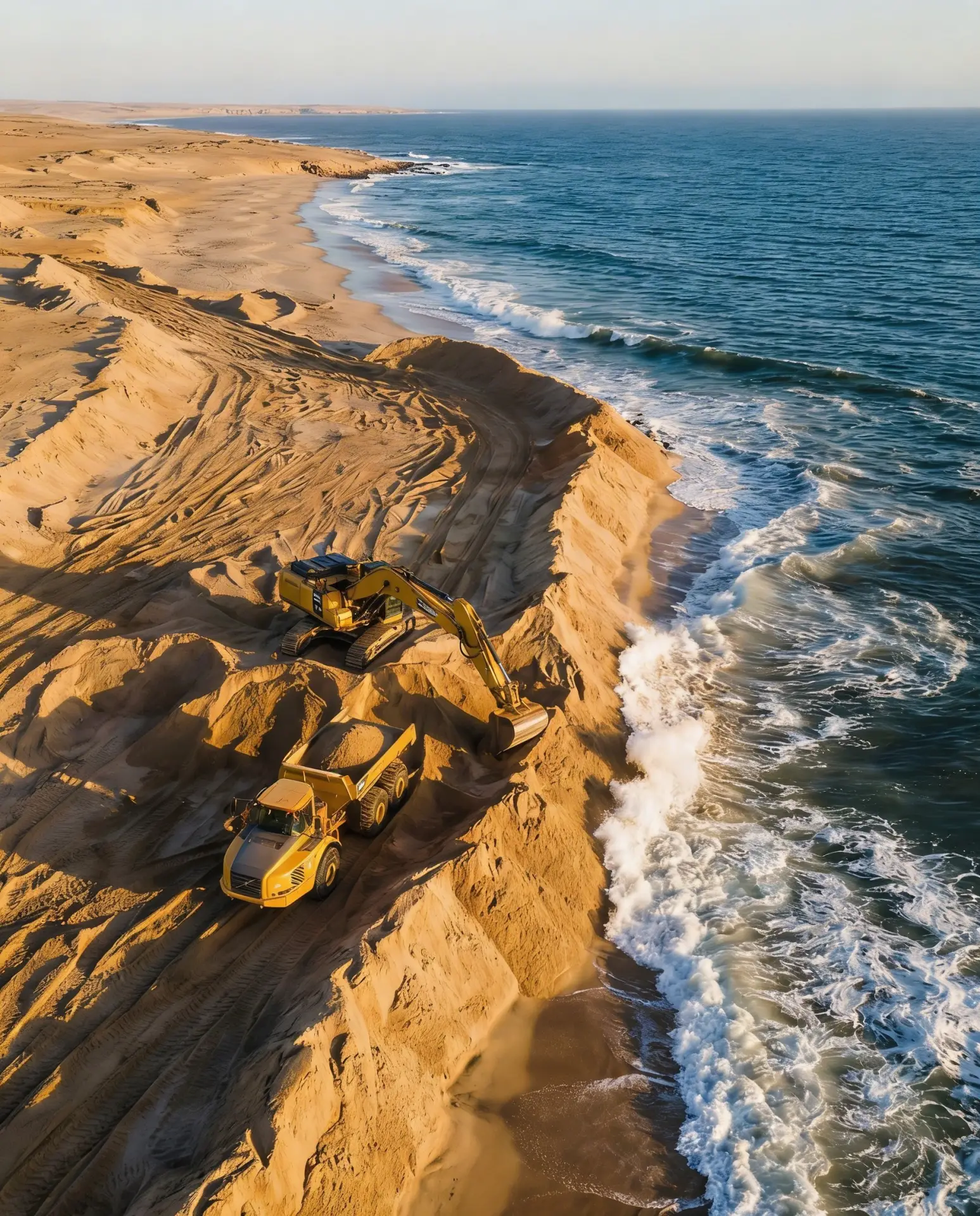
Coastal earthworks, production stripping, and beach accretion. We construct and maintain high specification seawalls, allowing the client safe access to their coastal resources. in Oranjemund.
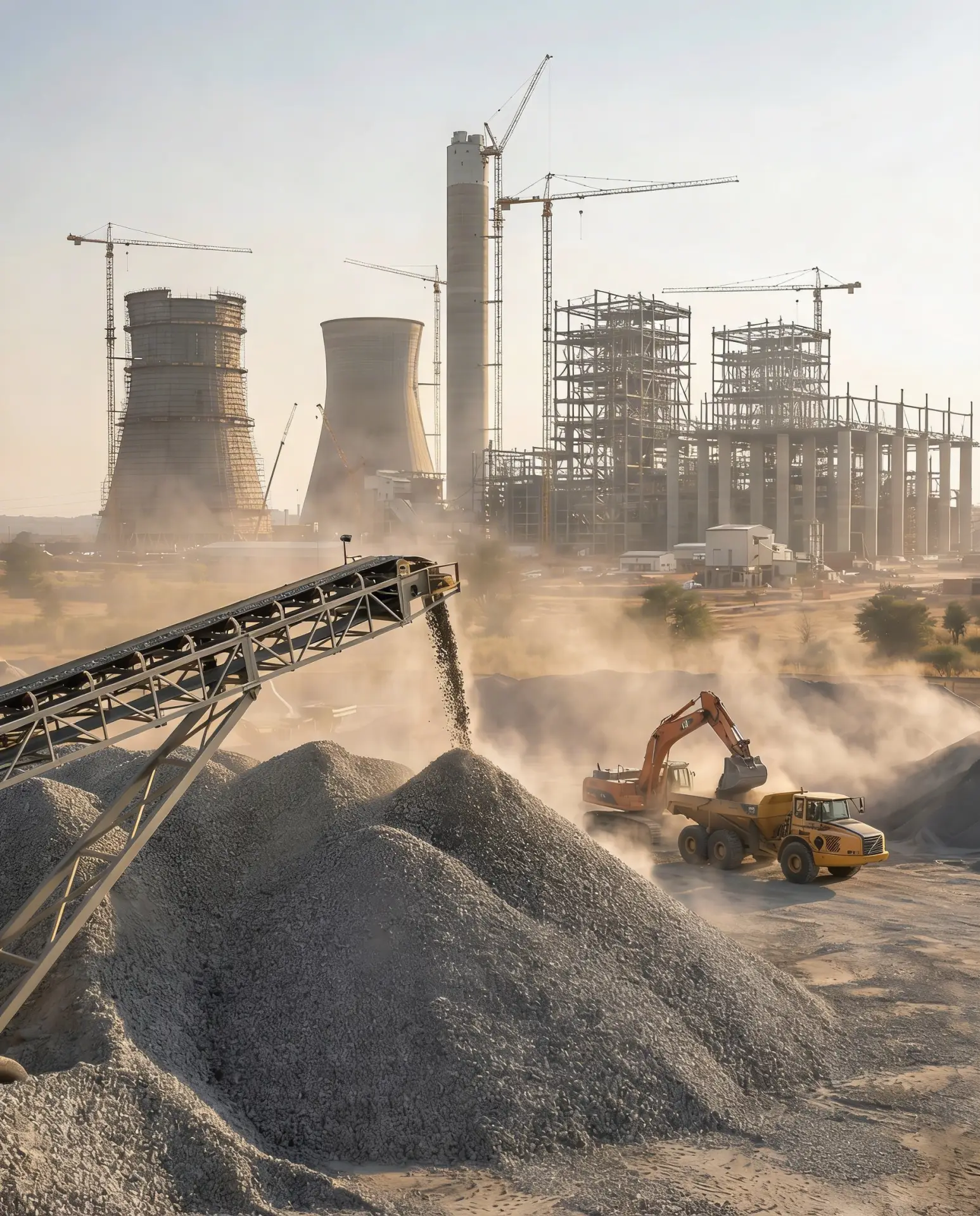
15 million tons of high specification construction aggregate from Howard Quarry to support the foundational build of this massive energy infrastructure project.
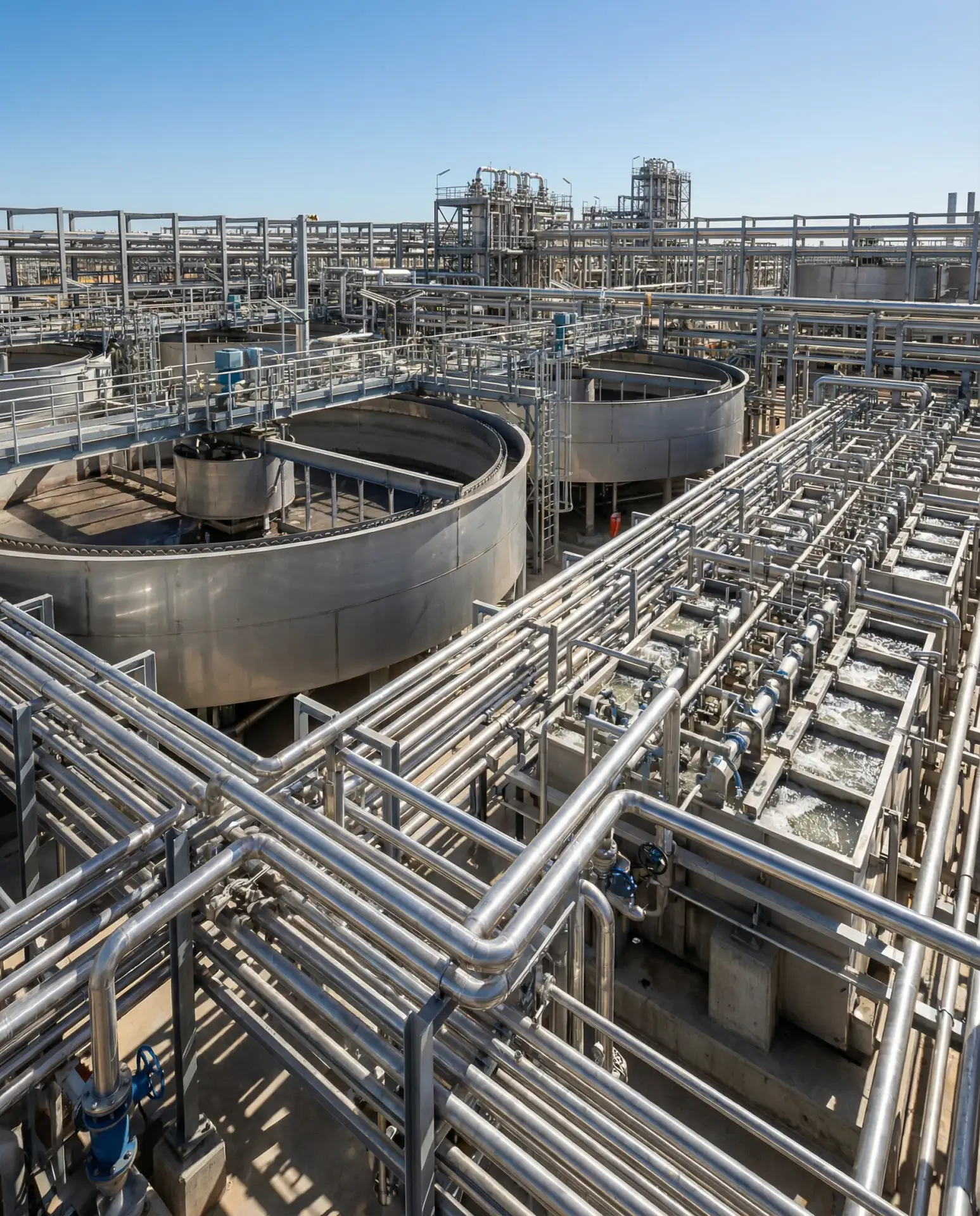
Expansion and upgrade of existing copper processing facilities, including new flotation circuits, thickeners, and tailings management systems.

A landmark B.O.O.T (Build, Own, Operate, and Transfer) project encompassing the full lifecycle of a 2.1 Million Tonne per Year processing facility.
Let’s discuss how our proven track record can ensure your project’s success.
B&E International provides critical contracted mining services to Namdeb’s Southern Coastal Mines in Oranjemund, Namibia. Awarded a major 60-month fixed-term contract in March 2023, B&E is a strategic partner in Namdeb’s long-term operational strategy, delivering specialized services that are essential to securing Namibia’s diamond-rich coastal gravels.
This project is a cornerstone of Namdeb’s “Life of Mine” (LOM) extension. B&E International’s role involves large-scale earthworks and specialized coastal engineering designed to push back the Atlantic shoreline and protect active mining sites from the extreme marine environment.
Production Stripping: Providing comprehensive mining services including production and “Beach Accretion” stripping to advance the shoreline.
Seawall Construction: Building and maintaining high-specification seawalls to safeguard mining operations from Atlantic storm surges.
Performance Metric: Managing high-volume operations with the capacity to load and haul approximately 2.7 million tonnes of sand monthly.
Strategic Impact: Supporting 213 permanent jobs and providing the infrastructure necessary to extend the Life of Mine.
Coastal Mining Support: Advanced beach accretion and overburden stripping in high-energy marine environments.
High-Volume Earthmoving: Large-scale loading and hauling operations exceeding 2.7 million tonnes per month.
Marine Infrastructure Engineering: Construction of specialized seawalls for coastal protection.
Contract Mining Services: Integrated site establishment, operational support, and long-term project management.
B&E International’s involvement in the Mpumalanga energy corridor began as a strategic partner for the Kusile Power Station construction. From 2011 to 2016, B&E established and operated the dedicated Kusile Quarry on-site, supplying the foundational material for one of the world’s largest coal-fired plants. Upon the completion of this primary phase, operations transitioned to Howard Quarry (Balmoral), evolving from a project-specific site into a high-capacity commercial hub serving the broader regional infrastructure market.
B&E International was responsible for:
Primary Build Supply: Delivered 5,5 million tons of high-spec construction aggregate specifically engineered for the Kusile Power Station’s foundational and civil works.
Strategic Transition: Successfully migrated operations from a dedicated on-site project quarry to the permanent commercial facility at Balmoral (Howard Quarry).
Current Operations: Managing high-efficiency crushing and screening systems to maintain a consistent 850k ton annual capacity for the regional market.
Infrastructure Support: Providing ongoing bulk material supply and logistics for large-scale civil works across the Mpumalanga province.
Deployment of high-output mobile and static crushing systems for massive-scale projects.
Specialized material grading to meet stringent Eskom and international engineering specifications.
Expert management of large-scale site establishment and multi-year project transitions.
Continuous high-volume production planning and preventative plant maintenance.
B&E International is a primary supply chain partner for the Mozambique LNG development, providing high-grade crushed aggregates and sea defense materials. Following the lift of Force Majeure in mid-February 2026, operations have ramped up to full-scale production to meet the project’s infrastructure restart requirements.
Operating from Pemba, B&E ensures the consistent delivery of specialized materials for heavy infrastructure and coastal protection. With the development approximately 40% complete and first production targeted for 2029, B&E’s resilient production systems remain pivotal to the regional supply chain.
B&E International was awarded a build, own and operate contract for the crushing, agglomeration and stacking plant at the Tschudi Copper Mine located approximately 20 kilometres west of Tsumeb in Namibia’s Oshikoto Region. The contract was awarded during the development phase of the project under the ownership of Weatherly International.
The Tschudi Copper Mine is an open pit operation utilising heap leach, solvent extraction and electrowinning technology to produce London Metal Exchange Grade A copper cathode. The plant has a design capacity of approximately 17,000 tonnes per annum of copper cathode. Following a period of care and maintenance, the operation was restarted under new ownership in 2024 and has returned to active production.
Under the Build, Own, Operate and Transfer model, B&E International was responsible for:
Design and construction of primary, secondary and tertiary crushing circuits
Installation of agglomeration systems and stacking infrastructure
Operation and maintenance of the crushing and material handling plant
Management of ore preparation for heap leach processing
Integration of crushing output into the solvent extraction and electrowinning recovery circuit
Mineral processing plant engineering and design
Crushing and screening system deployment
Agglomeration and heap leach stacking infrastructure
Copper sector plant operations expertise
Long term plant maintenance and operational management systems
Plant ownership feels like operational control. In practice, for a significant number of South African mining and quarry operations, it becomes one of the most expensive decisions on the books.
Contract crushing offers a structured alternative. In the current capital environment across Gauteng and broader South Africa, it is the model that an increasing number of experienced operations managers are selecting. This post sets out the considerations you need to evaluate before committing either way.
Plant ownership means your operation purchases, commissions, staffs, and maintains the crushing and screening plant. The asset sits on your balance sheet. The operational risk sits with your team.
Contract crushing is a service arrangement in which a specialist contractor supplies a fully equipped crushing and screening plant, operates it with qualified personnel, and maintains it throughout the contract period. Your operation pays for tonnes produced. The contractor carries the equipment, the technical expertise, and the mechanical risk.
Both models produce crushed aggregate. The difference lies in who carries the cost, the risk, and the management burden of getting there.
The purchase price of a crushing plant is the most visible cost. It is rarely the largest one over a project lifetime.
Capital costs (CAPEX) to account for at the outset:
Ongoing operational costs (OPEX) that accumulate throughout the project:
For a mid-range crushing plant operating between 150 and 250 tph, the total cost of ownership over a five-year period, when downtime losses are properly accounted for, consistently exceeds the original CAPEX figure by a material margin. This is not a theoretical observation. It is what the operational data shows.
Under a properly structured contract crushing arrangement, the cost model changes fundamentally.
In place of unpredictable CAPEX and variable OPEX, the operation works to a structured cost-per-tonne or monthly operational rate. Within that rate, the following are covered by the contractor:
The result is a predictable, budgetable cost directly tied to tonnes produced. When the plant is not producing, the operation’s cost exposure is contained. When production requirements increase, the contractor scales accordingly.
| Factor | Plant Ownership | Contract Crushing |
|---|---|---|
| Initial capital outlay | High — significant CAPEX commitment | Low to zero upfront capital requirement |
| Operational cost predictability | Variable — subject to unplanned maintenance events | Fixed or structured rate against production |
| Downtime risk | Carried entirely by the operation | Carried by the contractor |
| Capacity flexibility | Limited by the fixed asset configuration | Adjustable — contractor scales to production requirements |
| Technical expertise | Requires qualified in-house recruitment | Included within the service arrangement |
| Wear parts management | Operation’s responsibility and procurement burden | Contractor’s responsibility |
| Balance sheet treatment | Asset recorded on the operation’s books | Treated as OPEX — capital remains available |
| Mobilisation for remote projects | Complex, costly, and time-consuming | Contractor manages full deployment logistics |
Ownership is not the wrong answer in every scenario. It is the appropriate choice when the following conditions are genuinely met:
Where any of those conditions are uncertain or subject to change, the ownership argument weakens considerably.
Contract crushing consistently delivers better value than ownership across the following scenarios.
Projects with a defined production timeline.
Construction and infrastructure projects, mining contracts, and quarry expansions operating over a two to five year window rarely justify the CAPEX of full plant ownership. A contract crushing arrangement delivers production from mobilisation without tying up capital in a depreciating asset.
Operations requiring rapid production ramp-up.
When a new mining contract is awarded or an infrastructure project demands immediate aggregate supply, an in-house plant that is not yet commissioned, or is undersized for the requirement, cannot respond. A contractor operating across the 50 to 500 tph range can match plant configuration to the production obligation from the outset.
Remote and cross-border project locations.
Deploying and maintaining owned crushing equipment at remote sites in Limpopo, Mpumalanga, or cross-border locations including Namibia, Botswana, or Mozambique introduces logistical and maintenance complexity that specialist contractors are specifically structured to manage.
Operations where capital preservation is a priority.
Releasing CAPEX from equipment ownership allows that capital to be directed towards the activities that generate the operation’s core margin: mining, processing, and project delivery.
Not all contract crushing services operate to the same standard. A procurement evaluation should examine the following before any contract is awarded.
B&E International, a member of the Raubex Group (JSE: RBX), delivers integrated crushing and screening solutions to mining, quarrying, and construction operations across Gauteng, Mpumalanga, Limpopo, and throughout Southern Africa.
Operating from our Kempton Park base on the East Rand, our teams deploy crushing and screening plants across the 50 to 500 tph range, configured to your material specification, product requirement, and project timeline. Our operators are qualified, our maintenance programmes are structured, and our production reporting is transparent.
We carry the plant. We carry the technical expertise. Your operation carries the output.
If you are evaluating contract crushing against plant ownership for an upcoming project, the time to have that conversation is before capital decisions are made.
Our team will assess your throughput requirements, project timeline, and material specification, and provide an honest evaluation of what each model will cost your operation in practice.